





Replacing Brighton Museum's roof lantern
With a design from the 1870s no longer suitable in an age of climate change, it was decided to replace the museum’s time-expired rooflight with an insulated solid roof.

|
| An aerial view of the lantern before renovation works. (Photo: Donald Insall Associates). |
Introduction
Brighton and Hove Museums is re-roofing its 20th Century Gallery in a project led by Donald Insall Associates (DIA). The replacement of the rooflight with an insulated solid roof and redesigned rainwater drainage is currently under construction.
The project will reduce operational carbon emissions and maintenance costs while supporting a stable environment for the museum collection, and significantly improve climate resilience. DIA has challenged the like-for-like approach often applied to historic buildings and has instead, demonstrated that historic buildings need to continually evolve as they always have.
The Grade II* listed Brighton Museum is set within the grounds of the Grade I-listed Royal Pavilion and Gardens. The museum building was formerly the pavilion’s stables, built between 1803 and 1805 for the Prince of Wales (later George IV) in a style almost as extravagant as the pavilion itself. With time, and the pavilion’s fall from royal use, Queen Victoria eventually sold the stables and pavilion to the town in 1850. Debate ensued as to the buildings’ future use. The west half became a performing arts venue now known as Brighton Dome, and in 1873 the east portion, known as the Adelaide Stables, was converted into Brighton Museum to designs by Philip Lockwood, the Brighton Corporation surveyor. It is one of the earliest purpose-built public museums in the country.
Lockwood roofed over the stables’ main courtyard; his design featured a patent glazed roof lantern and slate roofing, with cast-iron and lead gutters, protecting the building from the elements. Below this, the ceiling is dominated by a separate coffered oak-and-glass laylight with cast-iron grilles to its perimeter, surrounded by lath-and-plaster barrel vaulting which meets the masonry walls. The design makes for a beautiful composition, creating a long, top-lit, double-height exhibition space with first floor galleries at each end. Known as the museum’s 20th Century Gallery, its exhibits include paintings and arts-and-crafts furniture.
Care standards for museums and collections have come a long way since the 1870s, and the roof design was simply not performing. The primary issue was that the lantern, last renewed in the 1960s, was thermally inappropriate for the building’s use. It lost heat in the winter, and experienced extreme solar gain in the summer, causing huge swings in temperature and atmospheric humidity. The open grilles and laylight design mean that these fluctuations are shared by the exhibition space below. UV from natural light is damaging to the collection. This has resulted in the lantern and laylight being painted over with emulsion internally and bitumen externally to reduce both UV and solar gain. Consequently, the original architectural intent of the gallery as a top-lit space has been lost but reinstating that light would be extremely damaging. In addition, the roof voids are extremely difficult to access and maintain.
Future-proofing
Funded by Arts Council England and Brighton and Hove City Council, the consented works will see the replacement of the non-original external roof lantern with an insulated, solid-lead roof construction, and the conservation and/or renewal and insulation of the surrounding slate, cast iron and wood surfaces to the roofscape. Together, the works will significantly improve the building’s thermal performance and prevent the entry of natural light to the gallery below. The lead rolls to the new roof will follow the spacing of the former roof lantern. Creating a warm roof space means that the cast-iron grilles can remain as they are, avoiding internal changes. The loss of the roof lantern is balanced by the opportunity to reinstate translucent glazing to the coffered laylight, and artificially light the gallery from above. This will reinstate the original architectural intent of the gallery as a top-lit space without the risk of UV damage to the collections housed below.
The rainwater drainage capacity has been assessed, and the lead gutters and rainwater details have been redesigned to exceed current standards, offering resilience against climate change and increasing rainfall. The specification and design of the works have consistently accounted for Brighton’s marine environment, for example in the specification of materials, surface preparation and paints.
Improving safety, access, maintenance and longevity is also a core aspect of the project. The works will establish new safe access walkways throughout the roof void to aid routine internal maintenance, and services will be rationalised to improve efficiency and reduce excess power use. Improvements to fire protection will be made throughout the roof void, including new fire compartments and a second fire-escape door at the north end of the roof.
The logistics and museum decant have been challenging, as has the temporary rainwater management on such a congested roofscape. The scaffold design faced significant constraints from the building, including the old stables drainage and vaults under the gallery floor.
This article originally appeared in the Institute of Historic Building Conservation’s (IHBC’s) Context 184, published in June 2025. It was written by Edward Lewis and Olivia Stitson. Donald Insall Associates is architect, lead consultant and CDM principal designer, and BSA principal designer. Edward Lewis is practice director and London Studio lead at Donald Insall Associates, and Olivia Stitson is senior architect responsible for the project.
--Institute of Historic Building Conservation
Related articles on Designing Buildings Conservation.
IHBC NewsBlog
IHBC sponsors Gardens Trust event 23-4 Sept 2026
.jpeg)
'Learning from the Past, Shaping the Future’ takes place in Milton Keynes
Renovations to Frank Lloyd Wright's Fallingwater complete
.jpg)
World Heritage Preserved project opens house for tours again
Shakespeare Birthplace Trust places Hall's Croft on HAR Register
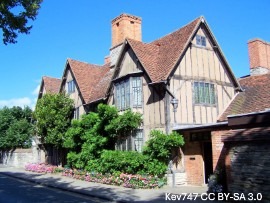
Stratford-upon-Avon home of Shakespeare's daughter is 'At Risk'
Lady Grange’s House repaired on St Kilda
.jpg)
National Trust for Scotland repairs stone cleit with link to famous island resident
Griff Rhys Jones on BBC Radio 4 Today programme
,_Green_Lane,_Derby.jpg)
The Victorian Society’s President unveiled its latest Top Ten Endangered Buildings 2026.
Need a MATE? Book your place now.

IHBC offers free webinars on applying for IHBC accreditation (Full & Associate).
UK Stained Glass Repository finds windows new homes
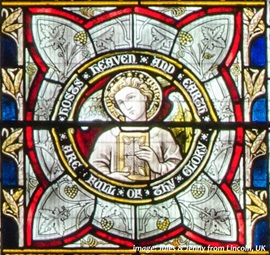
How are stained glass windows are rescued, stored and repurposed?
APPGEBE report sets high aims for quality
'Government must not sacrifice quality in drive to build 1.5m homes'
New measures protect Historic Shipwrecks from heritage crime

Underwater cultural heritage benefits from new HE guidance
How could the City of London skyline look in 6 years' time?

Visualisation shows approved planning applications as completed buildings
National Trust for Scotland calls for VAT cuts
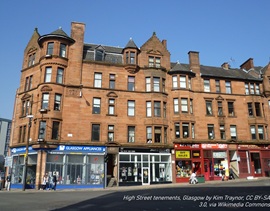
Heritage neglect is encouraged by current policies
IHBC's 'Context' Issue 186 features Industrial Heritage
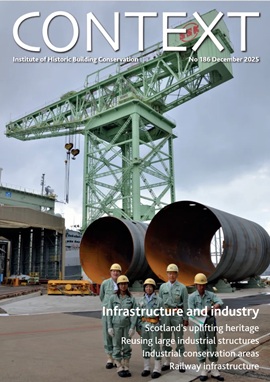
IHBC's members' journal reports on the challenges of conserving infrastructure
Book now for IHBC Annual School 2026
IHBC Annual School is taking place 18-20 June 2026 in Newcastle
RICHeS Research Infrastructure offers ‘Full Access Fund Call’
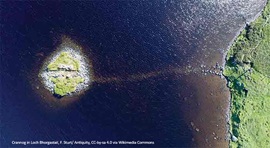
RICHeS offers a ‘Help’ webinar on 11 March
Latest IHBC Issue of Context features Roofing
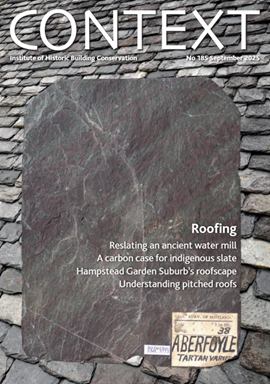
Articles range from slate to pitched roofs, and carbon impact to solar generation to roofscapes
Three reasons not to demolish Edinburgh’s Argyle House

Should 'Edinburgh's ugliest building' be saved?
IHBC’s 2025 Parliamentary Briefing...from Crafts in Crisis to Rubbish Retrofit
IHBC launches research-led ‘5 Commitments to Help Heritage Skills in Conservation’
How RDSAP 10.2 impacts EPC assessments in traditional buildings

Energy performance certificates (EPCs) tell us how energy efficient our buildings are, but the way these certificates are generated has changed.